Do you see anything wrong with the words in the newspaper headline?
Take a good look.
Are you gasping in horror?
Well, maybe not.
But, did you notice that the headline is missing a little punctuation mark?
That’s right – the hyphen. The hyphen is missing between the words “Camera” and “buying”.
Without it, the word “Camera” becomes a noun in the headline and the word “buying” can be read as a “verb”.
Without the hyphen, the “Camera” is personified and it becomes the subject that is in need of help.
So, it decides to buy some advice from a photojournalist.
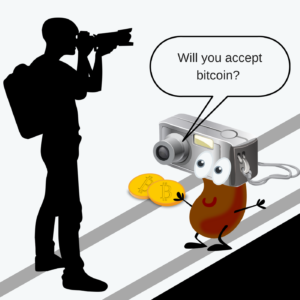
The words “camera” and “buying” in the newspaper headline should be used as compound adjectives.
They represent one idea; therefore, they should be linked with the hyphen.
The hyphen is a visual aid to help the reader understand that the adjectives are to be considered as one whole unit.
It’s also important to remember that the vast majority of compound adjectives are hyphenated, especially those that contain numbers.
In her book, “Eats (s), Shoots and Leaves”, Lynne Truss dedicates chapter six to the hyphen. She says that “many words require hyphens to avoid ambiguity.” (p.171) One of the examples she uses is this:
A long-standing friend is different from a long standing one.
The hyphenated version (long-standing) means that you have been friends with a person for a very long time. The second version (unhyphenated) could mean that the friend is tall or that the friend never sits down.
Remember: it may seem that hyphen is a minor punctuation mark. But if it’s omitted, or abused, it certainly has the power to embarrass you.